
A Discussion About Rhytidectomy (Facelift, Neck lift, Mini-Facelift)
With time, most people develop classic characteristics of the “aging face.” Any patient may develop all or some of these characteristics. They include wrinkles of the face and neck, loose skin of the face, especially the central lower face, the neck, and the jowls on either side of the chin. “Naso-labial folds” and “parentheses” lines or the grooves on either side of the mouth, “marionette” lines or grooves on either side of the chin, fine lines around the mouth or “lipstick” lines and “crow’s feet” may develop. In the neck, there will be an excess of skin and loss of the angle of the youthful neck. A separation of the muscles of the neck leads to “platysma bands” or cords of muscle under the neck, which can be very prominent with certain facial expressions. Often there can be a loss of volume or deflation in the cheeks, chin, temples, brows and lips as well. The brow can also droop. The upper lip and ear lobes can lengthen. The list is depressingly long.
The strong points of a standard facelift (some patients prefer the term “neck lift”) are restoring the youthful appearance of the neck and lower face and improving the jowls and major wrinkles of the lower face. I usually perform a deep plane facelift which addresses the deeper structures of the central face and neck and marionette area. A facelift has no impact whatsoever on the little lines around the mouth or the laugh lines around the eyes. There are other procedures available which can treat these issues. The fine lines of the skin of the face are best treated with Ellacor or CO2 laser or filler rather than a facelift, and rejuvenation around the eyes is discussed elsewhere. The “Marionette lines” are located where the tissues of the face stretch the most, so although you will have a definite improvement, this tends to return the soonest. This can then be dealt with later with filler, which is temporary, or Ellacor, which is a micro-coring procedure done with local anesthesia to remove tiny cores of skin to tighten the skin or a Morpheus8 procedure for tightening, so you will not need another facelift any time soon.
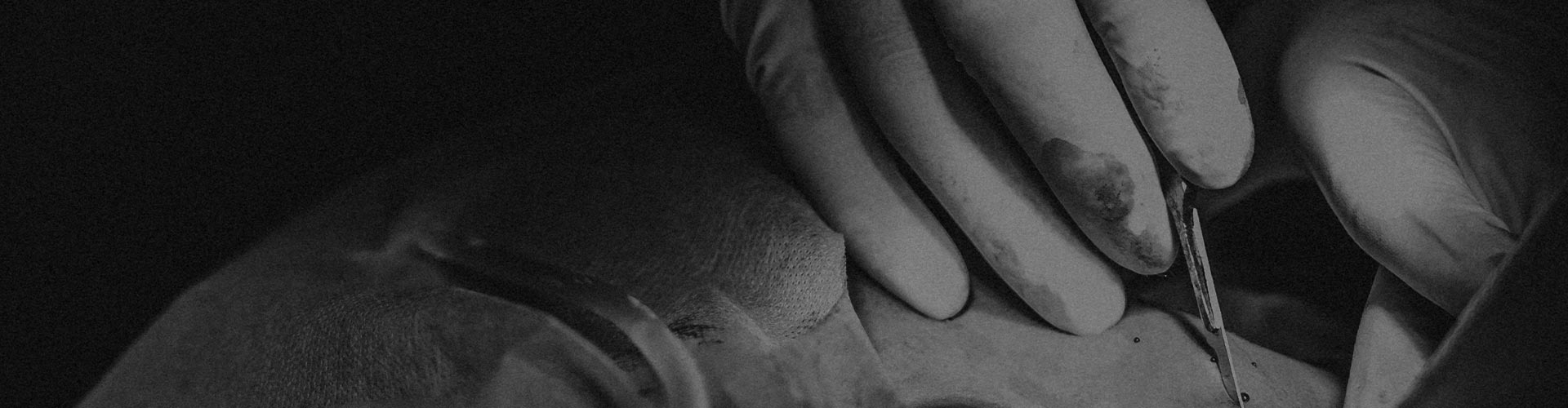
A facelift takes about 3 hours and is usually done under intravenous sedation at my office or Johnston Willis hospital if you have significant medical conditions. The incision extends from in the hairline above the ear to just in front of the ear, behind the tragus (the little cartilage prominence of the front part of the ear) and then extends down and around the ear up into the groove behind the ear. There are closeups of the incisions I use in the photo gallery on my website. It is very important that their incisions are not easily visible. The skin and muscles of the face and neck are lifted and tightened (deep plane facelift and neck lift). Suspension sutures are often placed under the jawline to improve the angle of the jaw. Not every patient needs the same facelift. We will discuss what you are looking for and what I think are your best options. A facelift is usually combined with some fat grafting to your cheeks, temples, jawline, brows, lips, earlobes, or chin to give your face a better shape. You may choose to enhance your eyelids or brow elevation at the same time. A “lip lift” for an elongated upper lip is another procedure often done at the same time as the facelift. You may choose to laser areas of fine wrinkling so that you will have just one recovery period, although longer.
After a facelift, you should not do any heavy lifting, stooping or any activity for several days that would allow the blood to rush to the head and no aerobic exercise for 2-3 weeks. Otherwise, there are no physical restrictions. A facelift is not a particularly painful operation, but it is common for patients to be somewhat bruised and swollen for a few weeks. The stitches will be removed between the fifth and fourteenth days. I usually tell patients they will hide for the first week and do their errands on the other side of town the second week. If you work outside the home, count on two weeks before you feel comfortable returning to work. For a woman, a radical change of your hair style or color can help distract from the surgery if you are not planning to tell friends and acquaintances. For men, glasses or a new beard or moustache are good distractions.
Some patients are good candidates for a mini-facelift or lateral facelift. If, when you pull the skin on the sides of your neck and face, you are satisfied with the amount of tightening under the chin, you are a good candidate for a lateral facelift. The advantages of this procedure are a shorter recovery by about a week and no incision under the chin, but it probably does not last as long as a full facelift. It also does not address the neck aggressively. I can help you decide which procedure is best when I see you at your consultation.
I almost always recommend a small amount of fat grafting at the time of a facelift. This helps to soften the appearance of the surgery. Possible areas for grafting include cheeks, brows, temples, jawline, chin, earlobes, eyebrows, lips and deep wrinkles. Unfortunately, although most of the fat takes permanently, some always resorbs as well. Fat grafting does not add any significant risk to your surgery.
Significant complications after a facelift are unusual but can include bleeding. This bleeding could be significant enough that we might need to drain a small collection of blood in the office with a needle or, at worst case, go back to the operating room to drain more. In my practice this has been essentially eliminated by using tranexamic acid (TXA) intravenous and then pills by mouth.
After any operation, an infection is a possibility. The risk of this is about 1%. You will receive antibiotics just before your surgery and for several days after your surgery. This will minimize the risk. During a facelift, the skin of the face is lifted and stretched to achieve the desired degree of tightness. As a result, the skin is at some risk for minor necrosis or scabbing which can lead to a thickened scar behind the ear where the skin is pulled tight but is almost never seen in front of the ear. This problem is most common in smokers who have a 7 times increased risk of skin loss after a facelift compared to nonsmokers. This procedure should not be performed on smokers unless they can absolutely abstain from nicotine including vaping or using nicotine replacement patches or gum for 2 months before and one month after surgery. Nicotine screening may be necessary the day of your surgery. IF THE TEST IS POSITIVE, YOUR SURGERY WILL BE CANCELLED.
A serious complication after a facelift is that of nerve damage. To paralyze the face or damage the main facial muscles is exceedingly rare, although it has been reported in the literature. More common would be to have temporary numbness of the ears or a minor weakness of the corner of the mouth which would also be temporary. Some numbness of the cheeks, which disappears over time, is normal. If you look in the mirror, you will realize that your face is not perfectly symmetrical, so it will not be perfectly symmetrical after a facelift either, although you should not be concerned that you would have any new asymmetries. I have purchased cosmetic insurance through “CosmetAssure” for all my cosmetic surgery patients so that if in the rare occasion a patient does develop a complication, you will have some insurance coverage. Your own personal health insurance most likely will not cover medical problems after cosmetic surgery.
A woman may wear makeup 1-2 weeks after your surgery. I would ask that you refrain from any tinting, perms or hair treatments other than shampooing and styling for about 3 weeks after the surgery or until the incisions are completely healed. I will give you the go-ahead for this. You may put Vaseline on your incisions to protect them the first time you get your hair colored.
People often ask how long a facelift will last. There is no set time that a facelift will last. It depends entirely on the individual. People who smoke and spend a lot of time in the sun or who have a genetic predisposition to premature aging have the kind of skin that will show aging earlier after a facelift than a patient who does not have these risk factors.
Some patients, especially those with poor quality skin or a very large amount of skin or fat under the neck or very heavy jowls, may feel they would like a second touch-up facelift within just a few years. This is because there is a limit to how much lifting or tightening a single procedure can safely be done at one time without risking significant wound-healing problems or more visible scars or an unnatural look. Using deep plane neck and face techniques will help the surgery to last longer, but how much is unknown. The skin of the face stretches and relaxes after the procedure to some degree on everyone. Most patients only have one facelift in their lifetime; however, some patients will have several, due to a combination of their own aging process, the elasticity of their skin and their personal desires. A significant weight gain or loss after surgery can undo the effect of a facelift. Luckily, we have two cosmetic devices that can make your facelift last longer. A Morpheus8 treatment yearly can help maintain your facelift and a lower face and neck “Ellacor” treatment can actually remove micro cores of skin and tighten the skin. Please be aware that if any enhancement is desired after your initial surgery, there will be fees that will apply. These procedures can be done with local anesthesia later. Ellacor or CO2 laser can also be done at the time of the initial surgery. We are lucky to have hyperbaric oxygen available in Richmond now. This will speed up your healing. We recommend several sessions before and afterwards. [EOS Agewell Center.]
I hope that this information has not been overwhelming in that it describes all the possible complications of this procedure. Nonetheless, most patients have successful, uncomplicated surgery and are quite pleased with their results. It will be a pleasure to discuss facelift surgery with you. Please feel free to call my office with any questions you may have (804-320-8545).

Additional Information
Find Before and After Photos, Instructions, and Videos here: